
Design iteration and insights
Iterating on Toutiao's
consumption experience
Get the highlights
前置理解热榜排序策略和数学原理

时间切片 i 内的
展现量总量
各时间切片 i
展现量加权求和
热度系数
包含时间衰减系数
人工加权系数等
缩放参数
对数平滑处理

时间切片 i 内的
展现量变化量
新鲜度系数
包含时间衰减系数
人工加权系数等
sign函数
根据展现量增减
区分正负处理
各时间切片 i
展现量变化量
加权求和
缩放参数
对数平滑处理

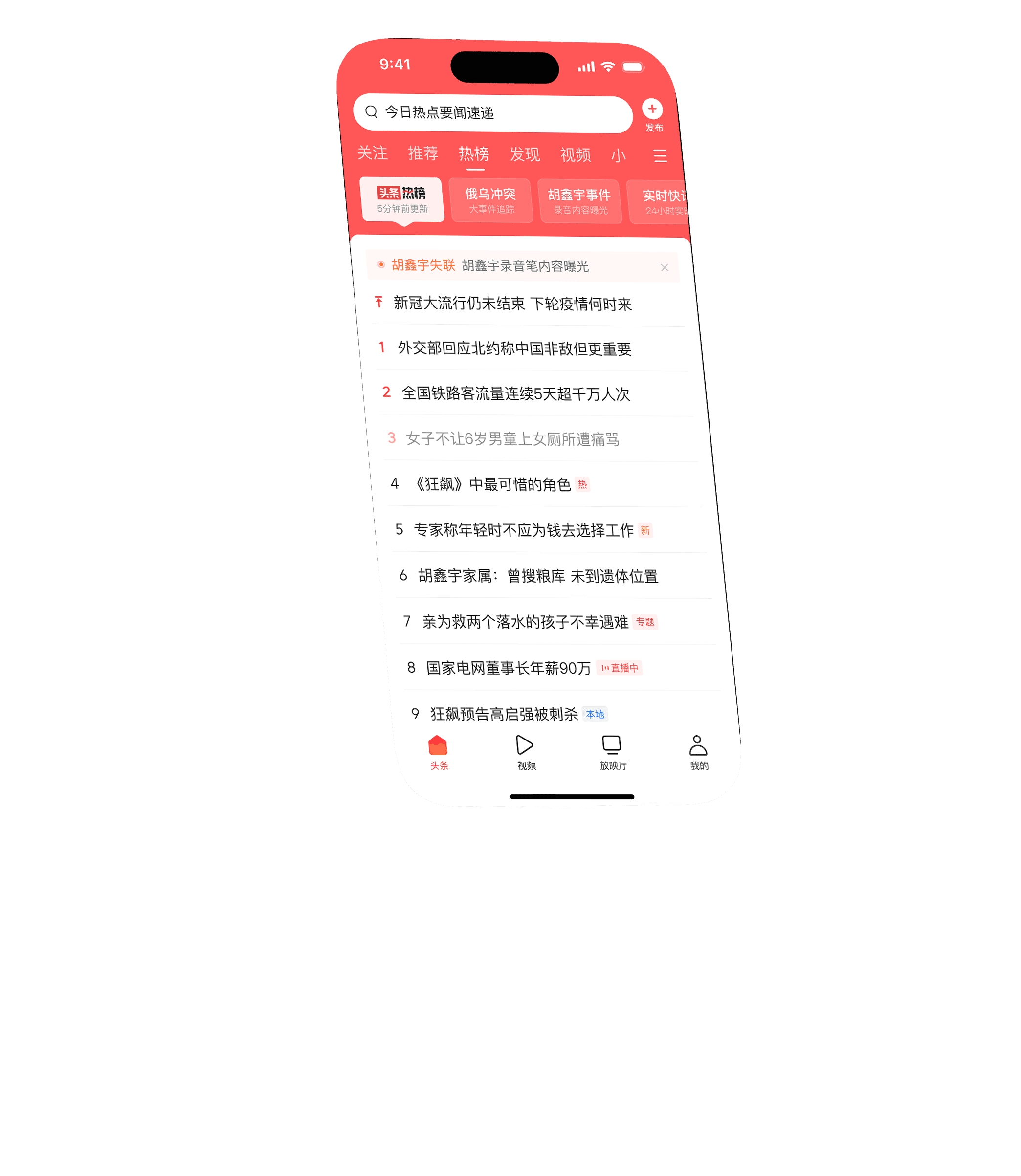
用热点专题培养用户日常看热榜的习惯

动态更新的海报入口
应用在时间跨度较大的热点事件,
给回访专题提供了相对稳固的入口
将专题在热榜频道分发
一眼扫视即可知晓当前大事,当前页消费减少跳转成本,更稳定的入口,并强化了热榜和专题的关联性
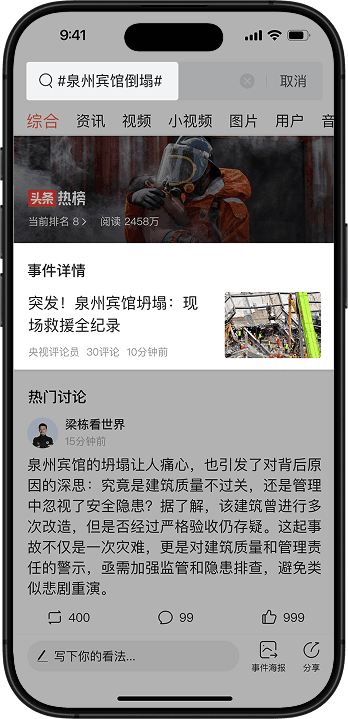
将详情页的优质评论聚合到落地页
通过分发解决互动氛围弱的短板
将优质评论聚合,刺激评论消费与发布
解决用户对于热榜热度的质疑



将详情页消费评论向落地页转变,进一步刺激消费,同时激发用户对评论内容进行二次讨论,保留查看原文入口,避免评论内容的上下文逻辑不连贯
用户会根据评论数量来推断事件热度,原统计口径仅包含落地页评论区。纳入详情页评论数后,更客观反映实际热度
将落地页从筛选向消费场景转变
各体裁适配当前页消费,提升消费效率
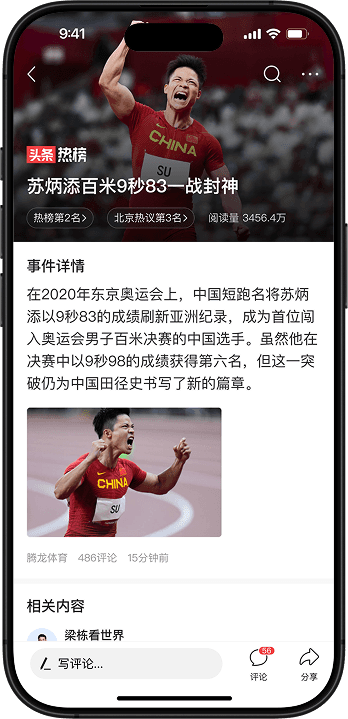
早期形态沿用推荐样式,侧重筛选
首条标题的信息增量小,用户对事件详情倾向简单了解即可,但长文压力大
各体裁适配当前页消费,减少跳转
首条文章由运营撰写摘要,短图文微头条支持当前展开,视频直播当前自动播放
探索垂类高热内容的分发方式
平衡个性化与公信力,形成总榜+垂类榜的产品形态
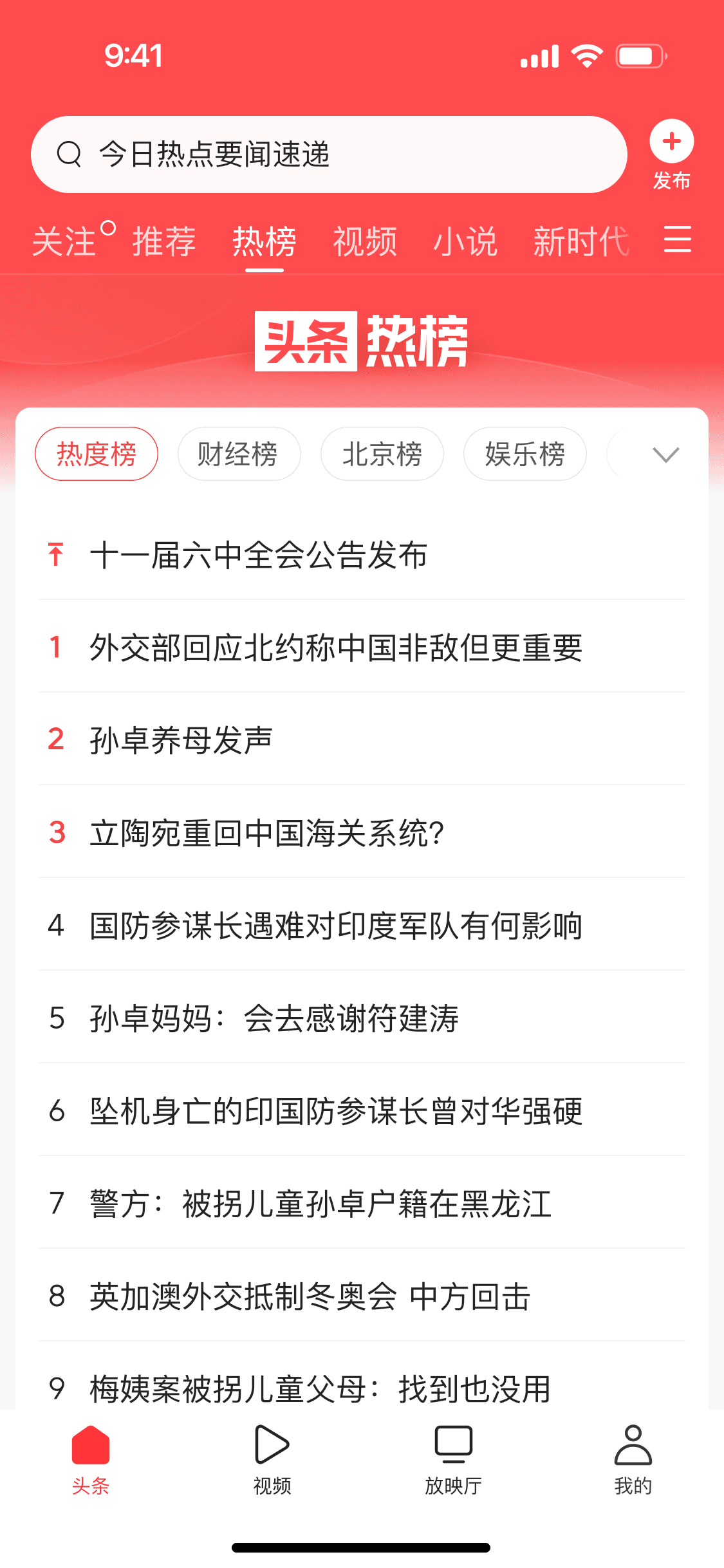


兴趣热榜
排序策略综合用户兴趣与全局热度,单个榜单一站式满足热点消费诉求,但有悖用户对榜单排序权威的预期
总榜+垂类榜
总榜排序引入垂类热度,扩充总榜内容多样性,根据用户兴趣推荐垂类榜单,各榜单排序回归千人一面,最终贴合用户习惯
As the content industry becomes increasingly saturated and users engage with multiple platforms at once, only differentiated strategies can sustain user value. By leveraging Toutiao’s strengths in content and user dynamics, we built a unique reading experience around four pillars: category trends, high-impact event hubs, UGC, and visual article modules—leading to measurable gains in retention and reading time.
Creating a news consumption experience unique to Toutiao.
目录
垂类高热内容的分发
从兴趣热榜到垂类榜
用专题引导用户日常看热榜
热点专题分发探索
通过评论分发激发用户活跃
搭建热榜评论氛围
适合长图文生态的交互方式
落地页消费形态探索
From personalized trending lists to category trending lists
Distributing trending category content
Using category content
to build Toutiao’s trending advantage.
Toutiao offers a wide range of content, but user demand for popular category content is not fully met. By improving how content is shown based on user habits, we found a way to make our trending list stand out. We explored how to adjust the ranking rules and display formats.
Using 24-hour PGC exposure volume
to ensure trustworthy content and rankings from the source
By calculating the exposure volume of PGC content published in the past 24 hours, we filtered out outdated and unreliable information. This ensured content reliability and freshness at the source. Exposure reflects recent user reading behavior and indicates how well content spreads on the platform. It also serves as a key signal for recommendation ranking. Combining both metrics helps form a positive feedback loop, improving the distribution of high-quality content.
Separating trend and recency
through total volume and change rate
We calculated overall heat based on total exposure, and recent change through time-sliced growth. A Sign function was used to assign directionality (positive or negative), helping detect dynamic shifts. Heat and freshness were weighted differently—recently rising content with high freshness was prioritized for trending visibility, while long-term content contributed to overall heat.
Balancing long-term trends and short-term shifts
using multi-window stats and exponential decay weighting
Heat and freshness were both computed by combining absolute value and growth across multiple time windows. A time-decay weighting function (e.g. 𝑦 = 𝑒⁻ᵏˣ) reduced the influence of older data. This allowed the system to favor content that aligns with long-term trends, while still surfacing short-term bursts.
Prevent single items from dominating
Normalize large values using pairwise smoothing
During major news events, content metrics can spike drastically, making it easy for a single item to dominate the list. To ensure diversity, we applied normalization by compressing extreme values, aligning all metrics to a comparable scale. Then we applied pairwise smoothing to reduce the advantage of large values, keeping the ranking fair and content varied.
Adjustable manual parameters
to adapt to volatile event conditions and business needs
The weight calculations for heat and freshness include tunable parameters that can be manually adjusted based on business needs. These allow us to flexibly lower the weight of specific items during major events. Parameters for normalization can also be fine-tuned to handle outliers, improving robustness and reducing skew caused by extreme values.
How to rank recommendations to ensure content is real, timely, and high-quality.
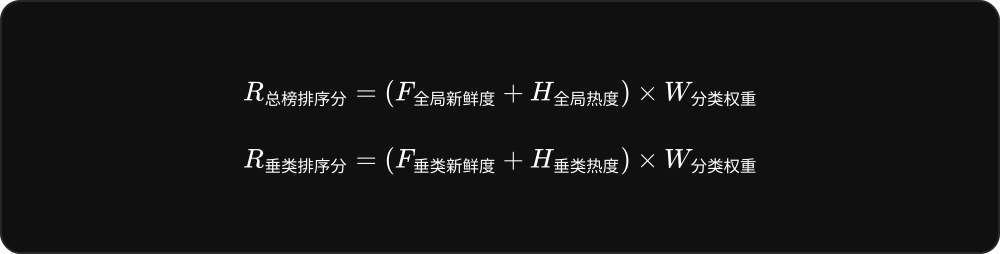
时间切片 i 内的
展现量总量
各时间切片 i
展现量加权求和
热度系数
包含时间衰减系数
人工加权系数等
缩放参数
对数平滑处理

时间切片 i 内的
展现量变化量
新鲜度系数
包含时间衰减系数
人工加权系数等
sign函数
根据展现量增减
区分正负处理
各时间切片 i
展现量变化量
加权求和
缩放参数
对数平滑处理

原榜单公式较复杂,部分内容以相近数学原理方式简化展示
Stage 1
Starting with ranking logic
Early-stage trending order was based solely on overall popularity
Toutiao’s ranking system
performs better than competitors in surfacing speed and content deduplication.
During the South Korea threat incident, related content appeared on Toutiao’s trending list within minutes of the official announcement, ranking highly without dominating the list.
In contrast, Weibo’s trending list at the same time was filled with outdated and repetitive content, with similar entries occupying much of the list, degrading the reading experience.
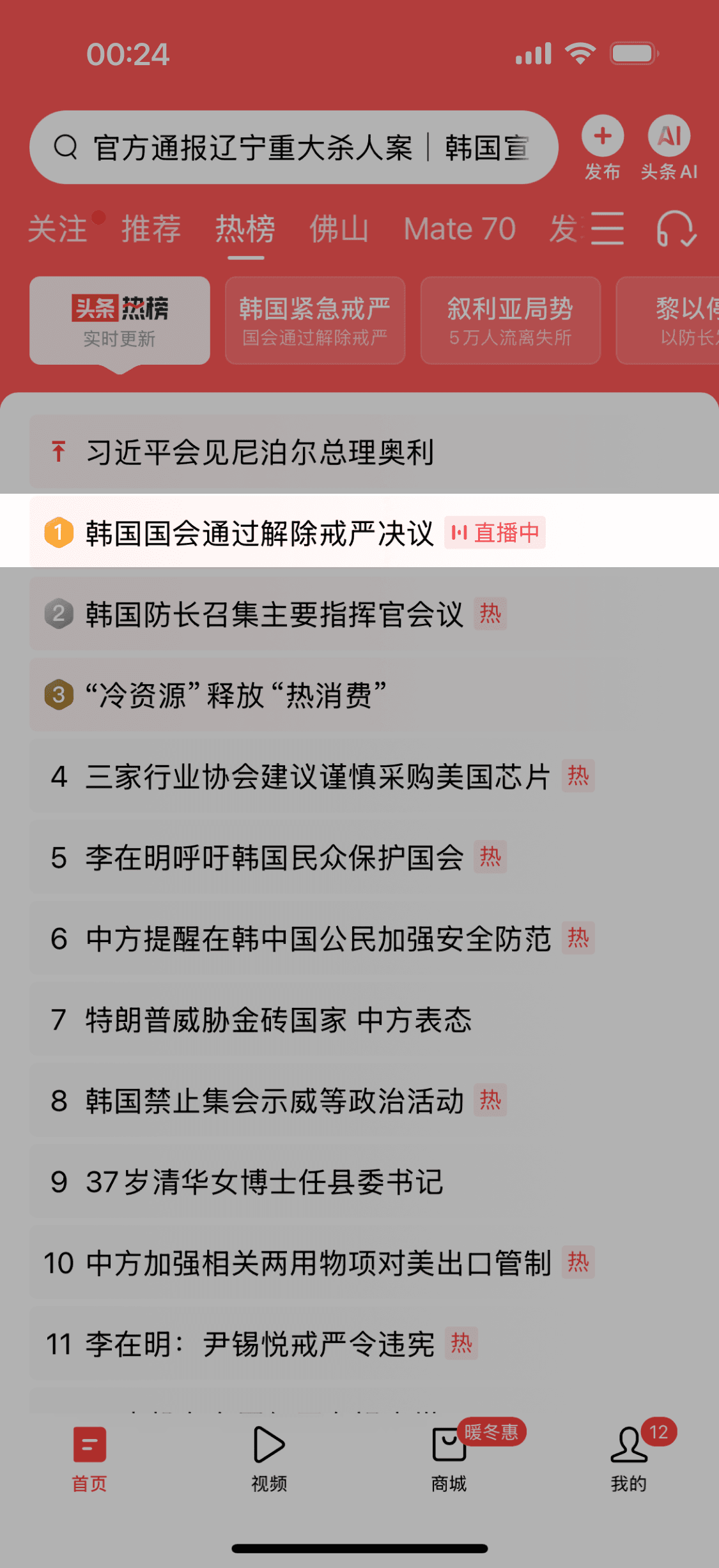

Toutiao’s ranking relies mainly on platform-wide popularity.
While this ensures credibility and trust in the trending list, it makes it harder for high-performing category content to surface—leading to a list that feels overly serious and lacks diversity.
Toutiao’s content landscape
struggles to meet demand for high-engagement category content
A key strength of Toutiao lies in its broad range of content categories—such as sports, international affairs, and military—each with strong and visible audience demand. However, high-engagement content from these categories often lacks visibility across key surfaces like recommendations, channels, and trending lists.
Suggested channel
prioritizes personalization
Trending list
prioritizes public relevance
Weaker in timeliness
Trending content often fails to surface in the feed
High in timeliness
But ranking is based on overall popularity
Category content struggles to surface
User expectations and reading behavior on trending lists
lie between public relevance and personalization
Users typically skim the trending list first, then selectively click on content of interest. This “selection” behavior can be optimized via recommendation algorithms to improve filtering efficiency.
Meeting trending demand through personalized trending list
A one-stop model for delivering both relevance and efficiency
The list includes major trending topics across the platform, while also surfacing high-interest content from user-preferred domains. Interaction-wise, a standalone list fulfills hotspot consumption needs in one place, while leveraging recommendation algorithms to reduce content filtering effort
Stage 2
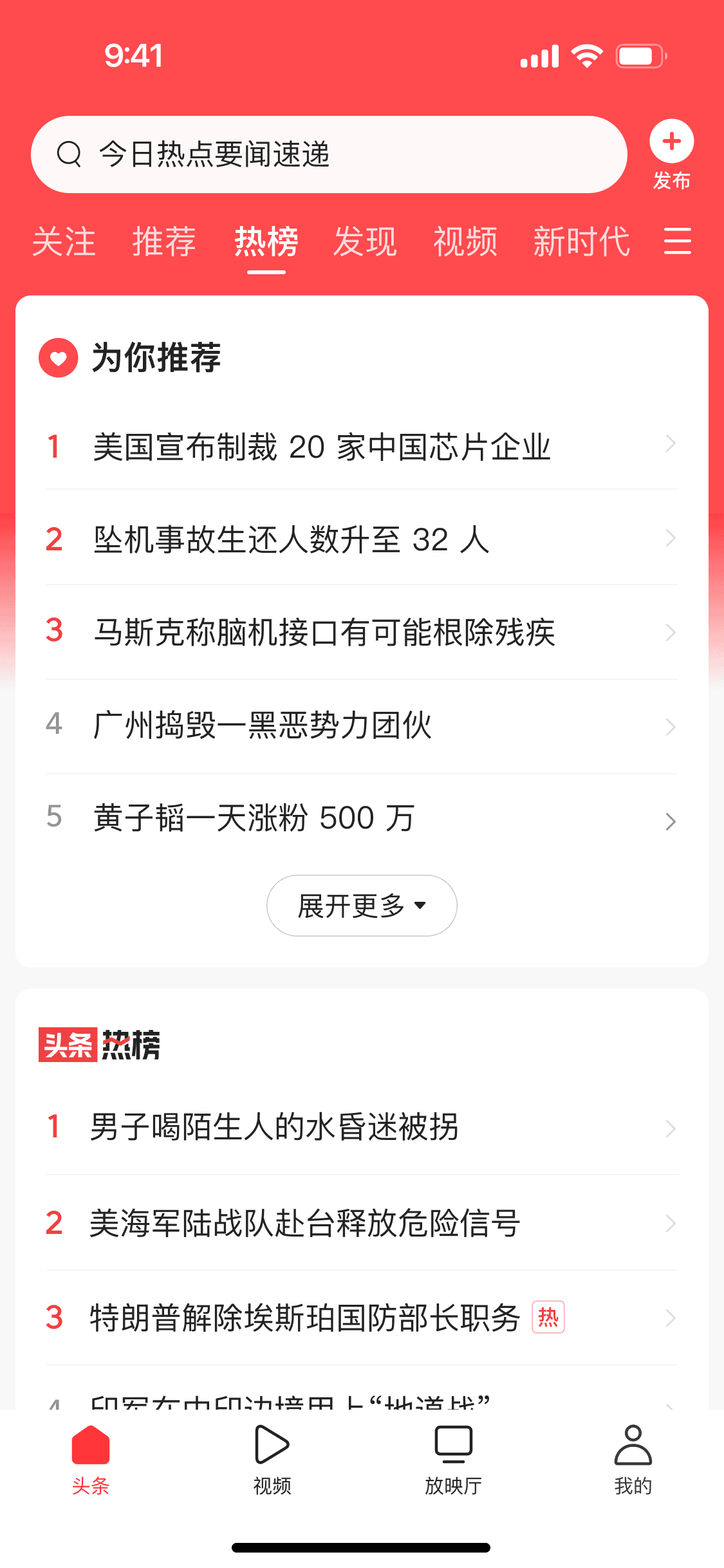
The personalized trending list retains overall popularity
by incorporating category heat and user interest weighting, balancing public relevance with personalization
大盘排序和用户兴趣分计算方式相似,但各自参数有差异

Balancing overall popularity and user interest
A single list fulfilling all hotspot content demand
Overall popularity ensures the visibility of major trending topics and maintains credibility; incorporating user interest introduces high-engagement category content into the list based on user preferences, adding personalization; the combination creates a one-stop hotspot consumption experience.
Targeted parameter tuning,
adapting to the dynamics of category content
Overall and interest-based rankings use separate freshness and popularity parameters, which can be flexibly adjusted according to the content ecosystem. For example, the freshness coefficient is typically set as β_overall > β_category, as category content is less active, so lowering freshness thresholds improves timeliness coverage.
The experiment results did not match expectations.
The personalized trending list aligned with user reading interest.
But its form conflicted with user mental models, causing retention to drop.
We spent several months optimizing ranking and algorithm logic, prioritizing exposure for the personalized trending list. Experimental data showed significant increases in click-through rate and average reading time, indicating that high-engagement content from vertical domains met user interest effectively.
However, the trending channel’s next-day retention rate saw a slight decline. From user interviews, we found that the highly personalized list undermined its perceived credibility. Additionally, due to overly similar presentation between the trending list and recommendation feed, the boundary between them became blurred, accelerating user churn.
After removing the personalized trending list, we revisited user reading habits: Users still expect awareness, even of content they’re not personally interested in
Users tend to scan the full list before clicking into content they care about. Previously, we assumed that uninterested content on the list was redundant, but interviews revealed that users still want to stay informed about it. Scanning the list isn’t just about personal interest—it’s also about seeing what others are following. For news products, “credibility” is reflected not only in content accuracy but also in the fairness of the ranking method.


Category lists activated more casual users and led to slight improvements in channel dwell time, list click-through rate, and retention among high-engagement users.
Learning from the personalized trending list, each category list applies a unified ranking logic. While ensuring the credibility of the ranking, it shifts toward recommending content based on user interest, balancing authority with personalization.
Category lists ultimately aligned with user habits
Core channel metrics turned positive after launch
Category lists adopt the same algorithm as the main list, but reorder content based on user interest weighting
A new balance between public relevance and personalization
Prioritizing high-quality categories
based on user demand and supply freshness
Low-timeliness categories (like history or book reviews) are manually excluded. We select strong categories using two indicators: user demand and content supply. Demand is measured by exposure across category channels; supply ensures there’s enough fresh content daily for personalized recommendations.
Using the main list for global signals,
category lists for depth, ranked by relevance to user interest
Users first check the main list to see overall trending topics, then dive into category lists to explore hot content in their areas of interest—seeing what other similar users are paying attention to.
Stage 3
Returning to a unified list
with distribution based on multiple category-specific rankings
Reinforcing trust and perceived credibility in content
Stage 4
As category operations deepen and quality content emerges, category-specific trending items can enrich the trending list. These items were previously surfaced through manual editorial processes. By integrating them directly into the main ranking system, the workflow becomes more efficient and structured.

按各垂类权重,加权求和总垂类热度分
Different weights across categories
Prioritize categories with strategic importance
Some strategic categories, such as military and finance, are granted higher weight parameters. This allows lower-volume but high-quality content from these categories to surface on the trending list, enhancing content diversity.
Amplify trending demands across domains. Support multi-category trending events
Some trending events span multiple domains. By amplifying their weight and reflecting real-world intensity, we increase the chances of such content appearing on the trending list.
Expand content diversity through tailored adjustments
During the experiment phase of the new ranking system, despite fluctuations in core metrics, our editorial judgment allows category-specific content to balance the political tone of the main list. This expands user perspectives, and as operations mature, the granularity of category tuning will yield measurable data benefits.
Enhancing the main trending list with category-specific rankings, expanding content diversity.
用专题引导用户日常看热榜
探索专题的分发方式
An editorially curated format that structures and presents the evolving narrative of a major event.
A high-impact event hub is an editor-driven content format designed to structure complex events. It anticipates user information needs and delivers updates in a clear, progressive narrative. Compared with algorithm-aggregated landing pages, it provides stronger structure and a clearer storyline, helping users quickly grasp the context and key developments of an event. This represents a differentiated content strength of Toutiao’s trending list.
Standard event page
High-impact event hub page
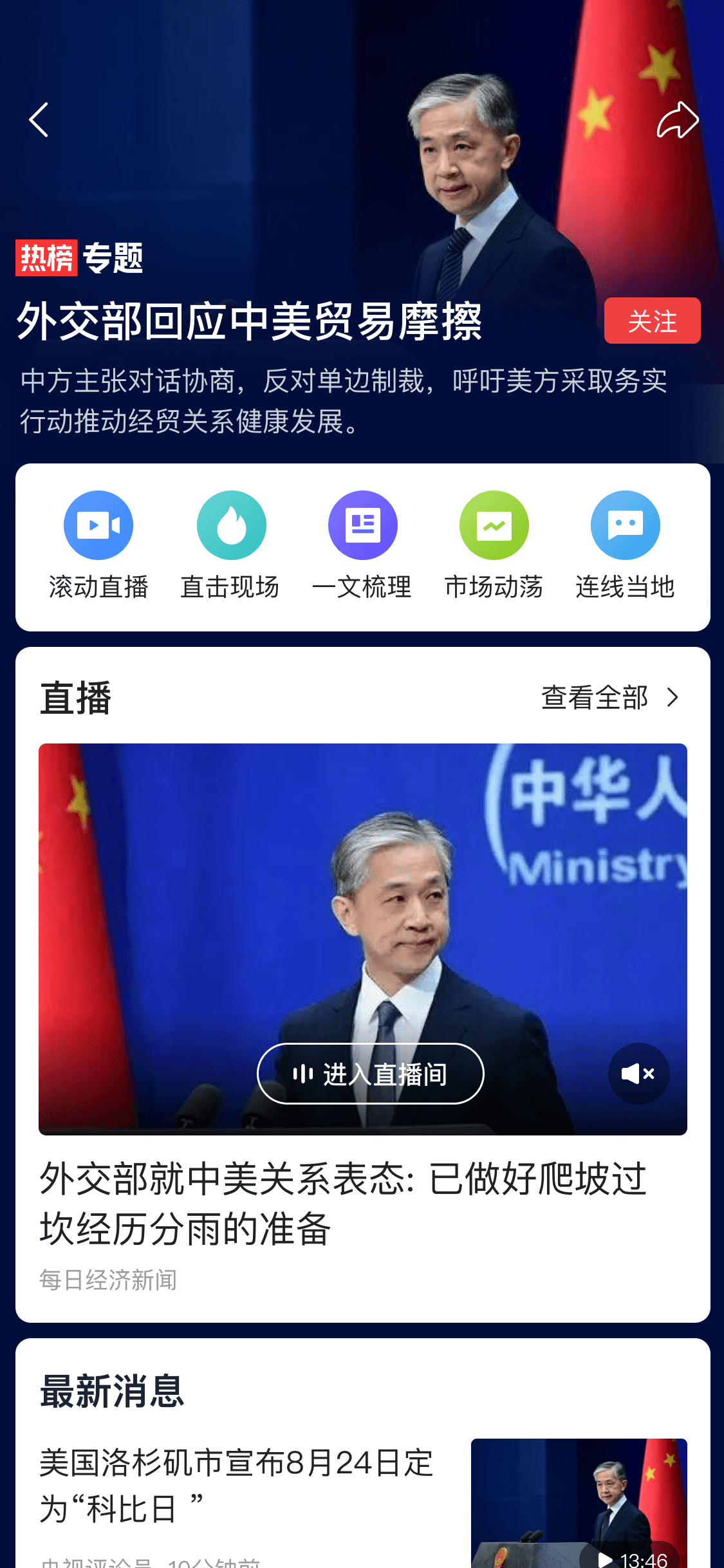

What is a high-impact event hub
Filterable timeline
Multi-camera live coverage
Q&A
Multi-angle overview
Early iterations focused on content modules
Designed to support refined content operations
Stage 1


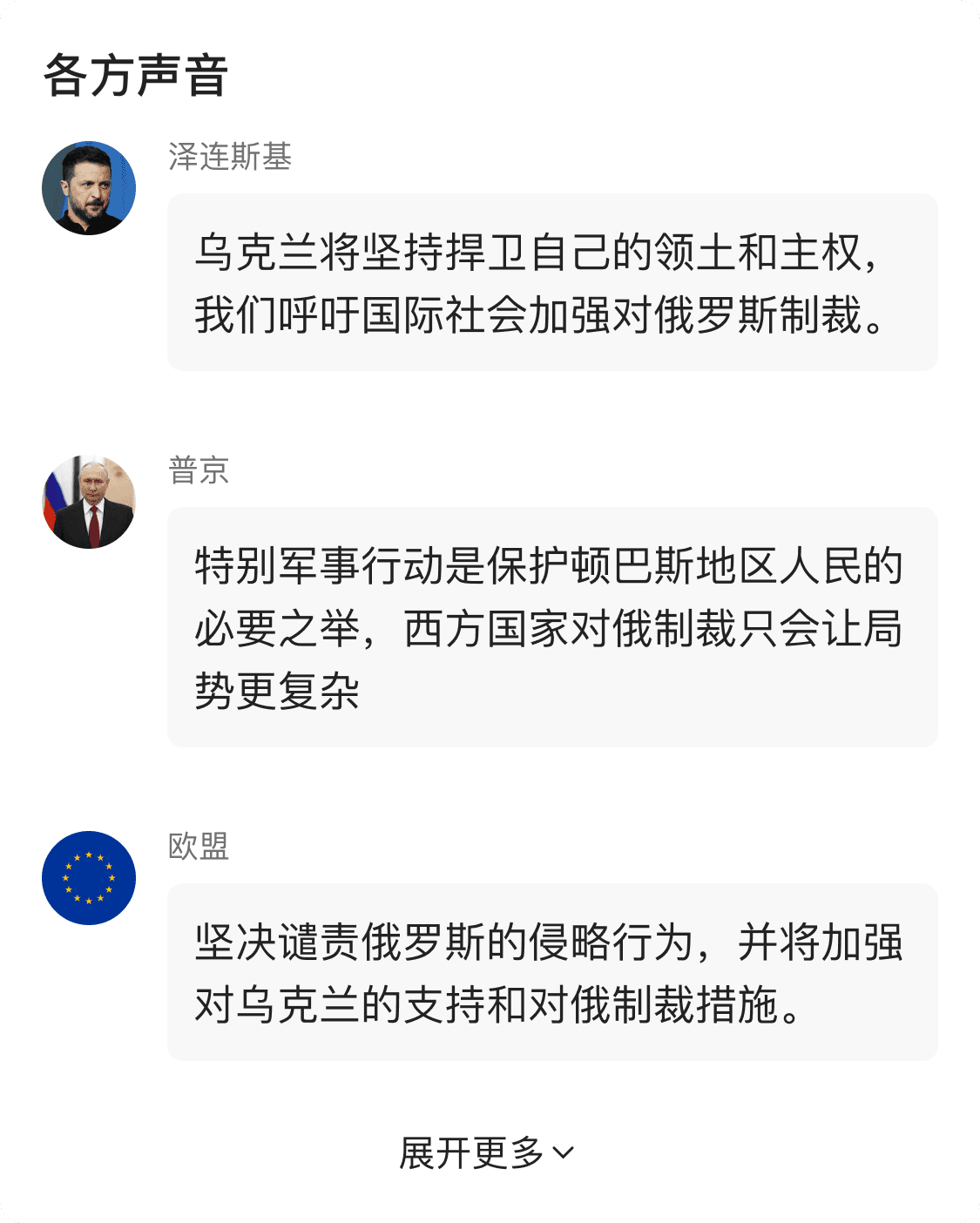

Distribution relies primarily on recommendations
Users tend to churn as event momentum fades
Major events do not occur every day. Distribution through recommendation feeds allows flexible responses and maximizes exposure, bringing short-term traffic gains. However, without a stable entry point, it is difficult to retain users or build lasting usage habits. As event momentum declines, users are likely to drop off.

Clarify the business goal: increase channel penetration
Start exploring how event hubs are distributed
Default approach
Surfacing event hubs in the trending list
Stage 2
The challenge of event hub distribution:
tension between content updates and return visits
Event hub content ranked in the trending list
Event-related landing pages surface the event hub entry
Compared with recommendation-based distribution, where entry points are highly volatile, placing event hubs in the trending list follows the same ranking logic as other events. As long as an event maintains momentum, the entry can remain visible for a period of time, offering a more stable access point for short-term return visits.
The objective was to turn the short-term activation gains from major events into everyday value. By cultivating a habit of checking trending events during daily news consumption, overall DAU could be lifted. Channel penetration and reverse activation were defined as key intermediate metrics. Exploration focused on in-app distribution, improving trending list content, and increasing distribution efficiency. For event hubs, the emphasis was on strengthening their connection with the trending list to reinforce users’ habit of following trends.


Event hubs are typically distributed only when new updates are available, to avoid interfering with the presentation of real-time content. However, even when there are no updates, users still want an easy way to return and check whether an event has progressed. Although a follow feature was introduced, the access path remains too deep, and related user feedback continues to surface. This tension represents a core challenge in event hub distribution.
For major trending events
Top-banner entry as a more stable distribution approach
Campaign-style entries
Such as the memorial event for Yuan Longping
For major trending events
Multiple banner entries for different event hubs
Top-banner entries are given higher distribution priority and remain visible for longer periods, providing users with a relatively stable return path. However, click-through rates tend to be lower. This is likely due to limited content dynamics within the entry, resulting in weaker attraction. In addition, the format closely resembles promotional ad placements, which further reduces users’ willingness to click.
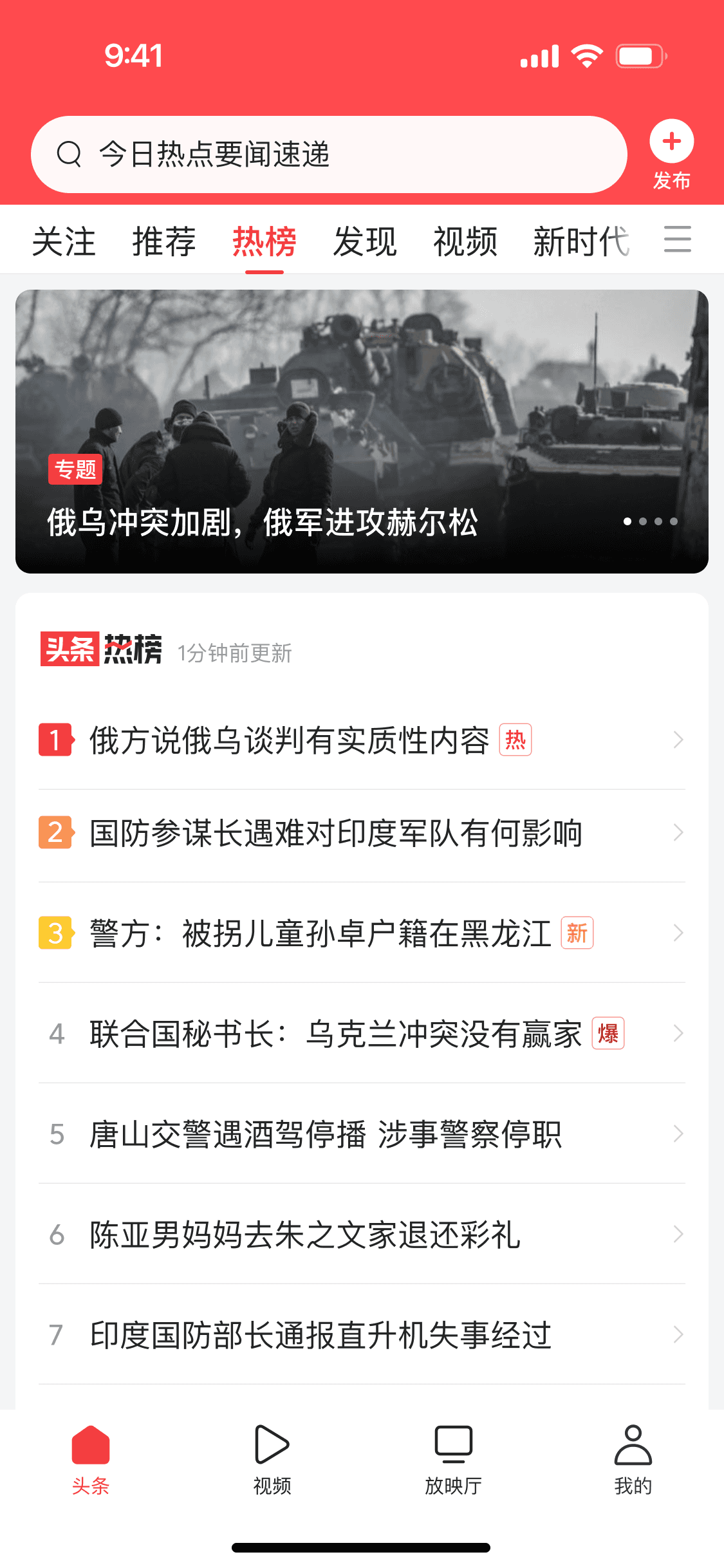
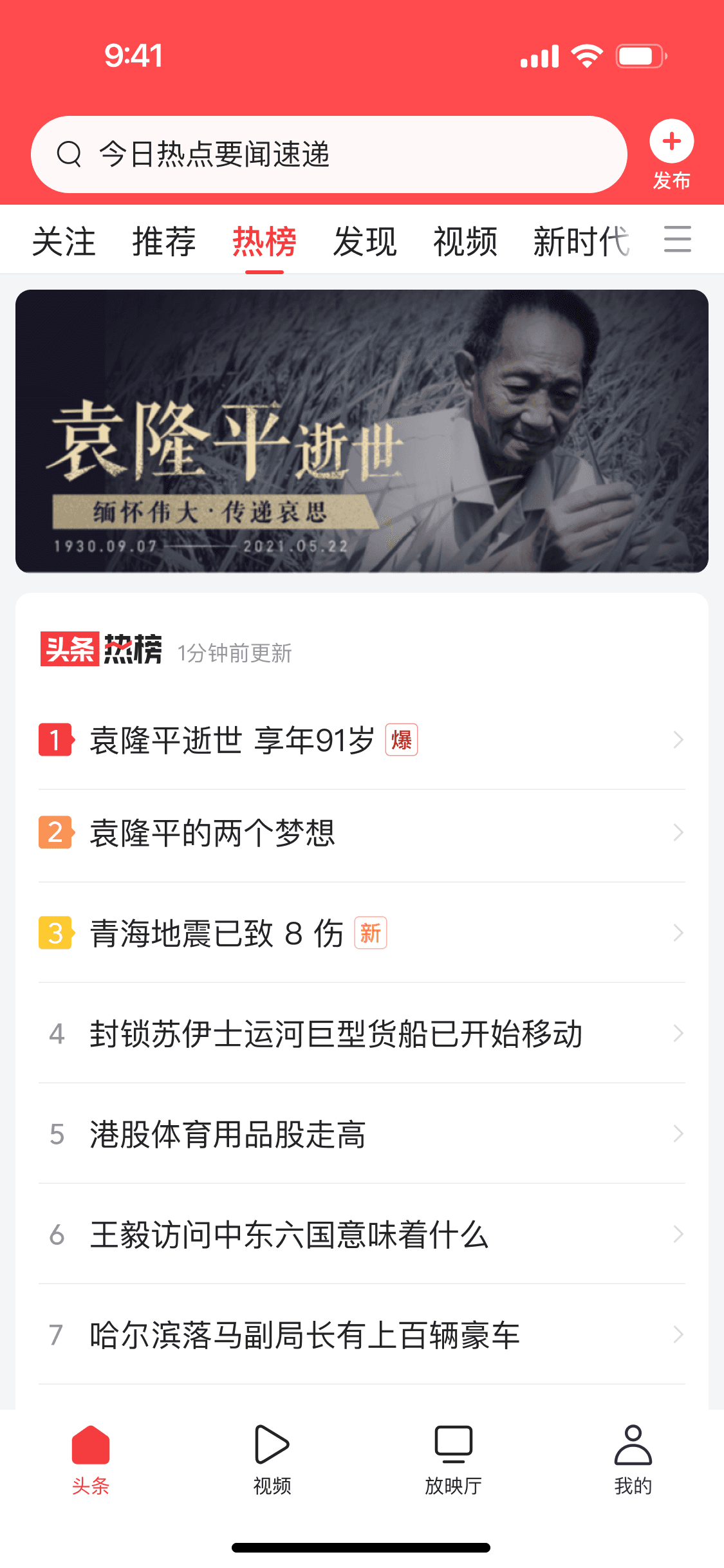
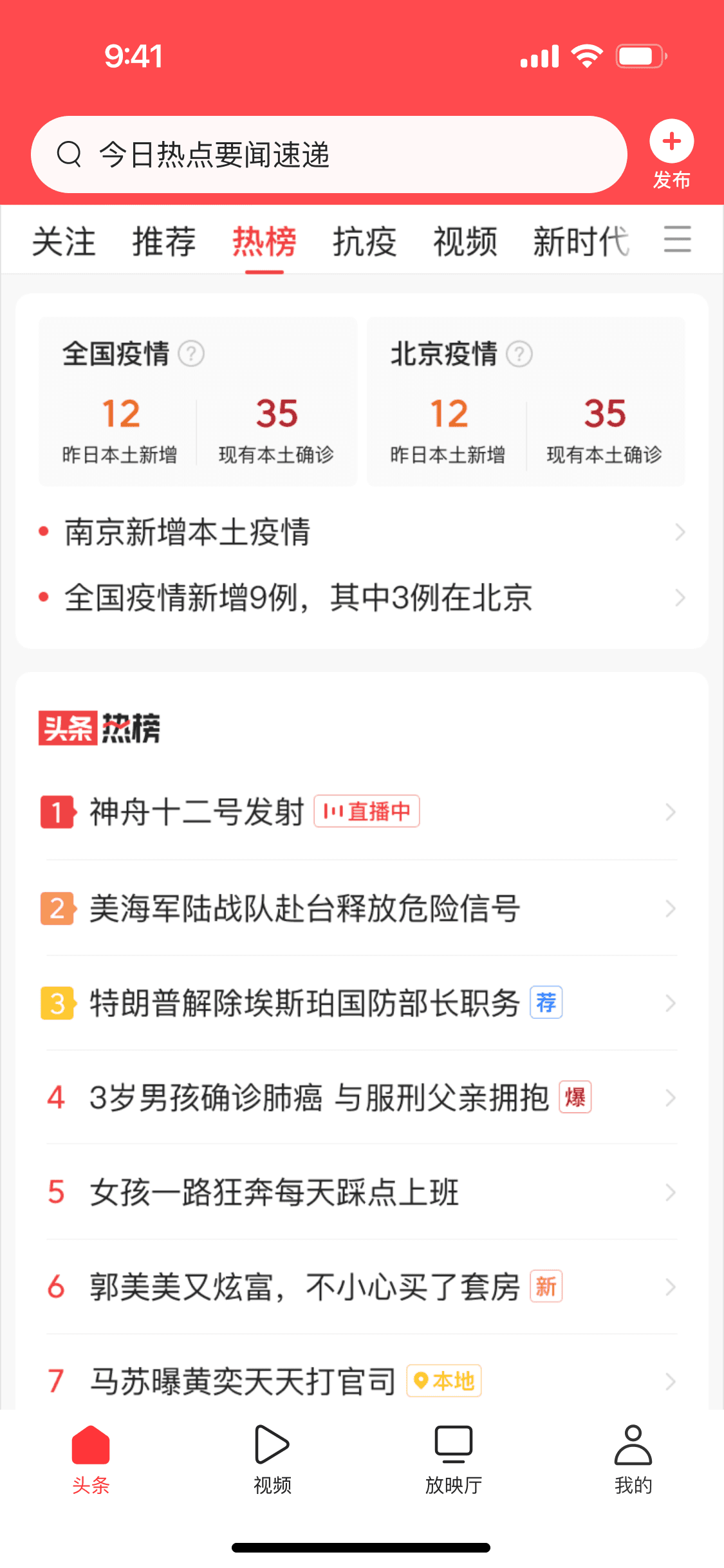
For long-running events with extended time spans
Introduce a stable entry powered by dynamic content updates
Pandemic data
Olympic medal table
Stage 3
During widely followed events that unfold over a longer period of time, structured entries were introduced. Dynamically updated information significantly increased users’ willingness to click. Results from reverse activation experiments showed a modest uplift in channel penetration, indicating this approach as an effective way to build users’ habit of checking the trending list as part of daily news consumption.

Distribute event hubs through the channel
Build a habit of checking the trending list in daily use
Stage 4
Default to the overall trending list
Surface event hubs by category
A top tab layout lets users quickly scan major events after entering the trending list, helping build an active habit of browsing trends. Content can be consumed directly within the channel, reducing navigation cost and strengthening the link between event hubs and the trending list. Compared with recommendation-based distribution, this provides a more stable entry


Along with the channel rename, directing recommended event hub entries straight into the trending list more effectively guided users toward deeper reading within the channel and helped convert them into engaged users. After launch, the solution delivered positive gains in channel retention and reading time.

通过评论分发激发用户活跃
构建热榜评论氛围
Toutiao is dominated by PGC long-form articles
A weak commenting atmosphere remains a clear limitation
Toutiao has long relied on recommendation-driven distribution, which weakens creators’ incentives to build a personal identity. Combined with the high production cost of PGC long-form articles, the ecosystem leans toward content consumption, resulting in a relatively low DAU posting rate. In contrast, Weibo relies on follower-based distribution, fostering an identity-driven creator ecosystem and a more active community atmosphere.
Two approaches to building a UGC atmosphere
Community platform model
people drive content
Identify seed users and incentivize high-quality contributions, which then motivate broader user participation. This model suits in-depth discussion around recurring topics.
Information platform model:
content drives people
Identify high-discussion topics and amplify distribution to activate potential contributors within those topics, increasing the perceived presence of UGC.
The information platform model fits Toutiao better
From content mining to distribution
Ongoing exploration of a UGC ecosystem around the trending list
In the early stage, interaction signals were introduced into ranking logic to boost highly discussed content. However, as many high-discussion posts were speculative in nature, click-through rates declined after ranking. The focus then shifted toward editorial content mining. Through this process, it became clear that when the interaction ecosystem is still immature, simply strengthening front-end distribution has limited impact. As a result, the direction moved toward building the UGC ecosystem from the content source.
Early approaches mirrored Weibo
But did not fit Toutiao’s posting ecosystem
Unlike Weibo, Toutiao’s PGC-dominant ecosystem results in lower acceptance of micro-post-style contributions from ordinary users. In the publishing flow, comments from regular users are displayed alongside content from professional creators, which increases posting pressure and raises the barrier to participation.
Weibo: short-text format
Toutiao: short-text format


Micro-posts were reworked into a comment-based format, with the comment entry fixed at the bottom of the event detail page. After tapping, users are taken directly to the comment section. Professional content and regular comments are displayed in separate sections. After launch, comment volume per PV increased significantly.
Refine the comment format
Align with interaction patterns familiar to Toutiao users
Stage 1
Low-effort interaction patterns
Activate user participation
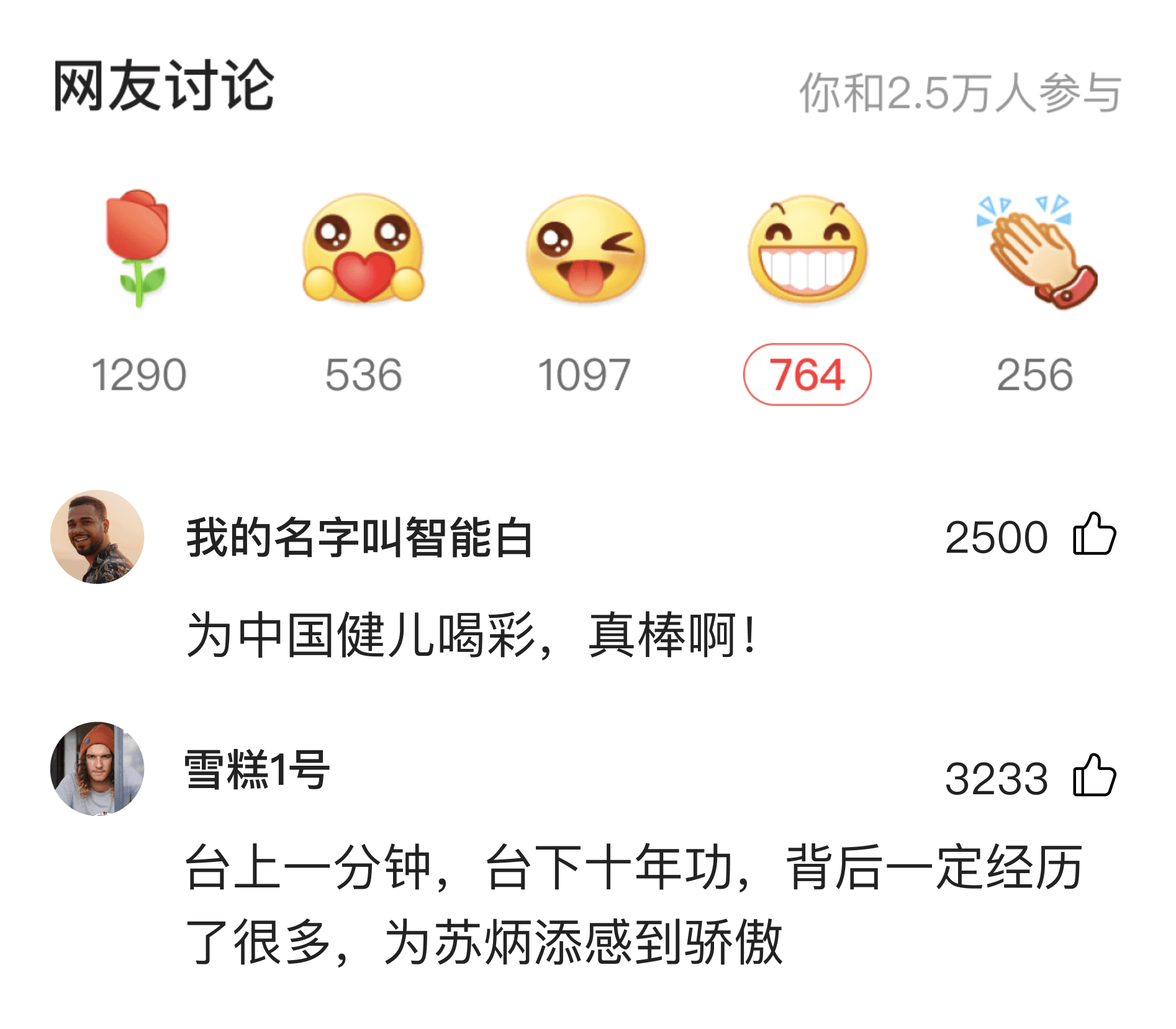
Reactions
Users tap emojis to express attitudes toward an event. Emojis are configured by editors, but they are less expressive than text. Emotional release is limited, click penetration is low, and the additional UI also affects content exposure, leading to reduced reading time. The feature was later removed.
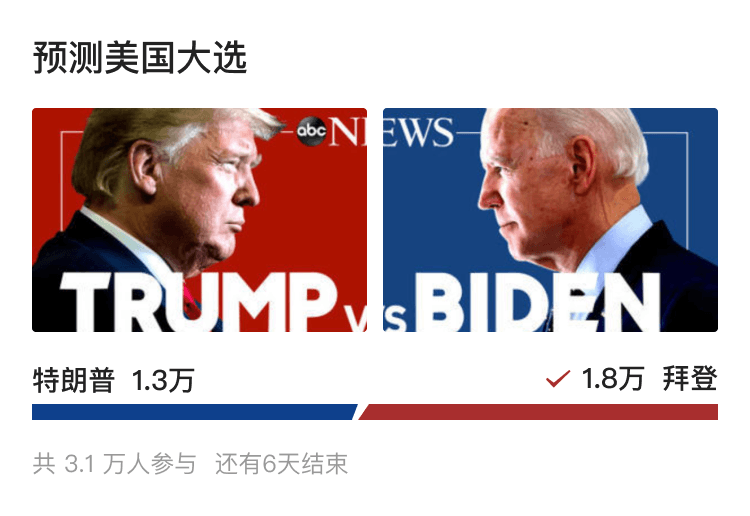
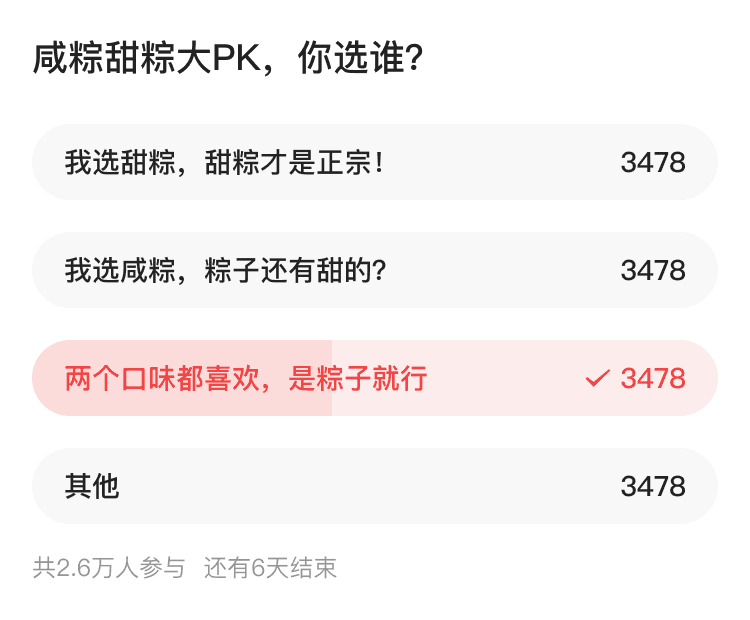
Polls
Poll questions and options are editorially defined and provide more concrete interaction than reactions, resulting in better click penetration. After voting, prompts were tested at the comment entry to encourage posting, but the effect on comment generation remained limited.
The impact on comment posting and consumption was limited, but these patterns offered richer interaction options and lowered the barrier to participation.
Stage 2
Pull article-level comments into the event detail page
Use aggregated comment volume to encourage posting
Comments closely related to the original articles were filtered and aggregated on the event detail page, while links to the original articles were retained to preserve reading context. After launch, user-generated comment volume increased organically, along with a modest lift in time spent consuming comments.
Following the read-before-comment flow, comment scenarios fall into two main types, each corresponding to a different solution approach.
Shift consumption from article detail pages to the event detail page
Aggregate article-level comments
into the event detail page

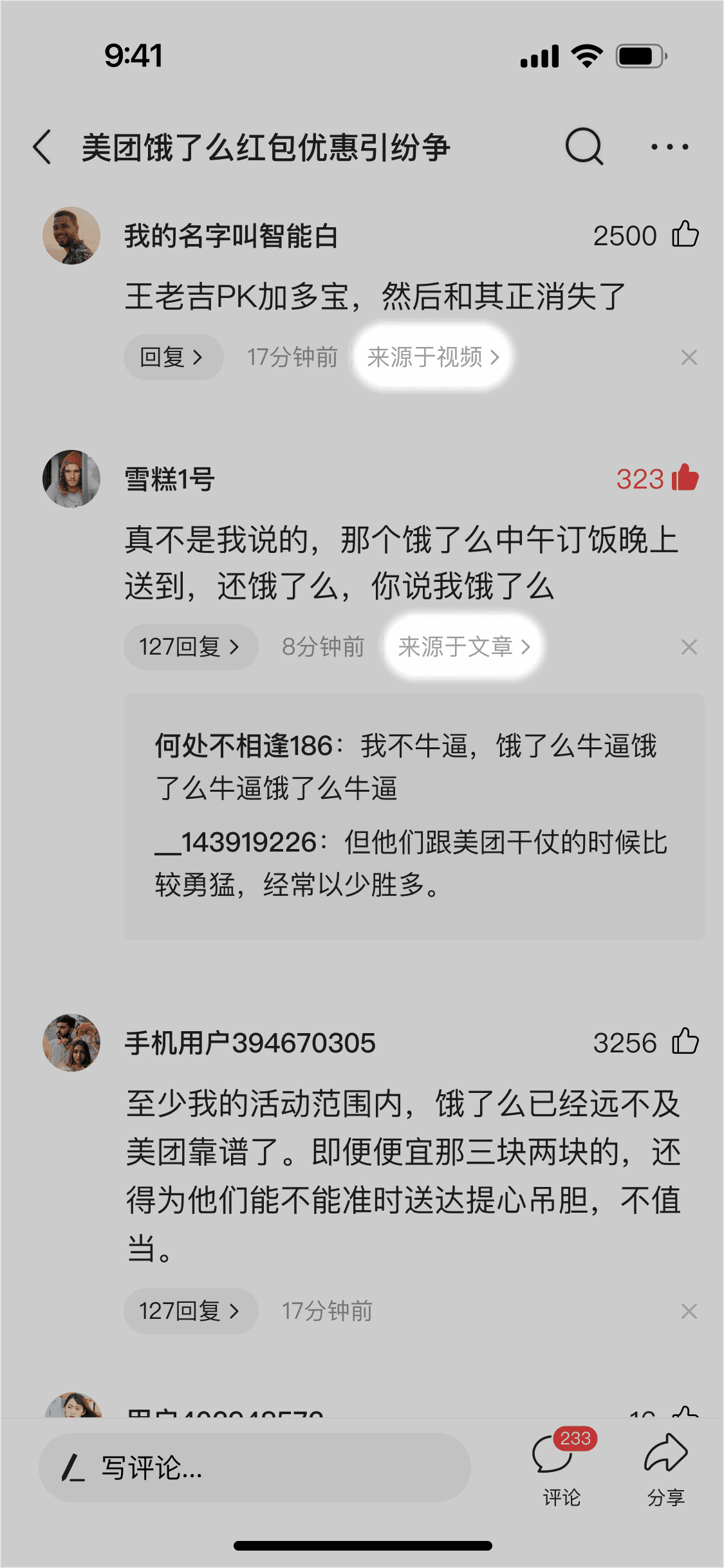
Low comment counts on the event detail page, users question the actual popularity of the event
Comments from individual article detail pages were aggregated and surfaced on the event detail page. While this exposed overall discussion more clearly, the event detail page still only reflected comments collected at the event level. Even when individual articles had high comment volumes, the aggregated count on the event page appeared low. Since users often judge popularity by comment volume, this created doubt about the true heat of trending events.
Commenting on the original article
Users read specific articles on the article detail page, so comments tend to be focused and concrete. On the event detail page, content is more aggregated, making comments less specific.
Secondary discussion around comments
Driven by herd psychology and follow-up discussion, richer comment threads on article detail pages further triggered secondary conversations.
Stage 3
Why do users prefer commenting on the article detail page rather than the event detail page?
Aggregate comments from article detail pages into the event detail page, while keeping access to the original comment threads
Stage 4
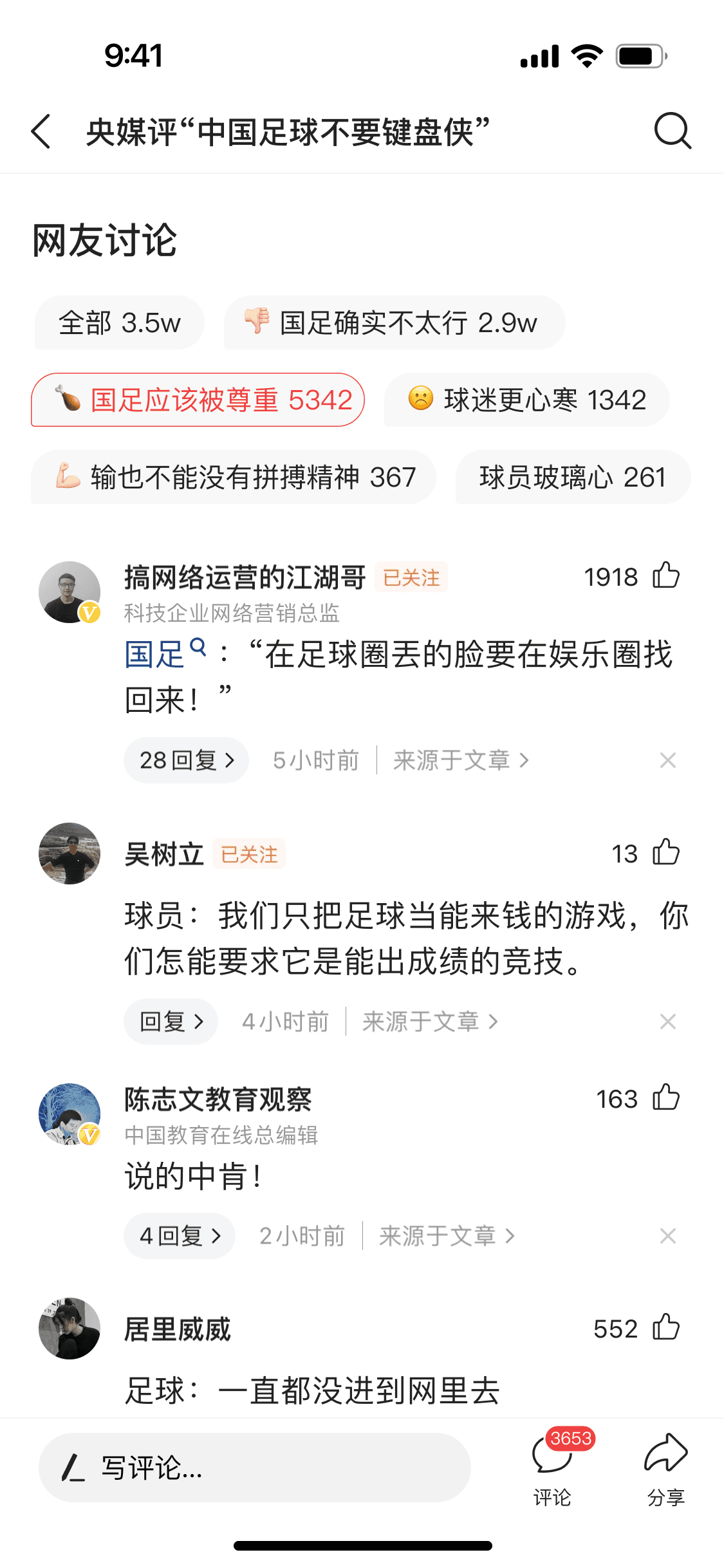
For trending events, clear viewpoints can trigger broader follow-up discussion. Comment ranking was optimized using a combination of models and manual review to classify comments into two groups: viewpoint-driven comments and non-viewpoint comments. Viewpoint-driven comments were weighted higher and surfaced more prominently, leading to further growth in organic comment creation and increased time spent reading comments.
Optimize comment ranking
Use high-quality comments to encourage secondary discussion
Further strengthen the perceived diversity of viewpoints
Stimulate comment creation and consumption
Explore a more lightweight comment consumption experience
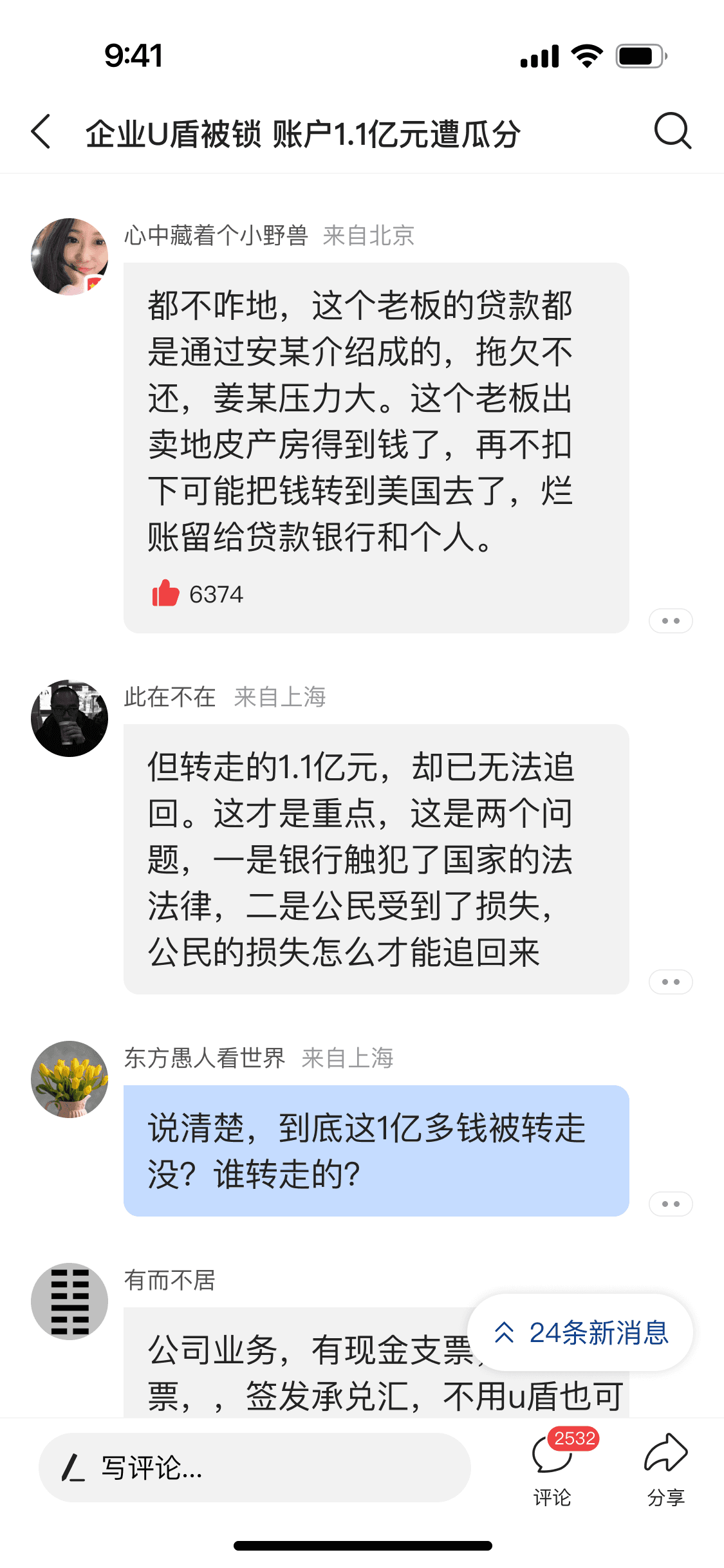
Present comments in an IM-style conversation format
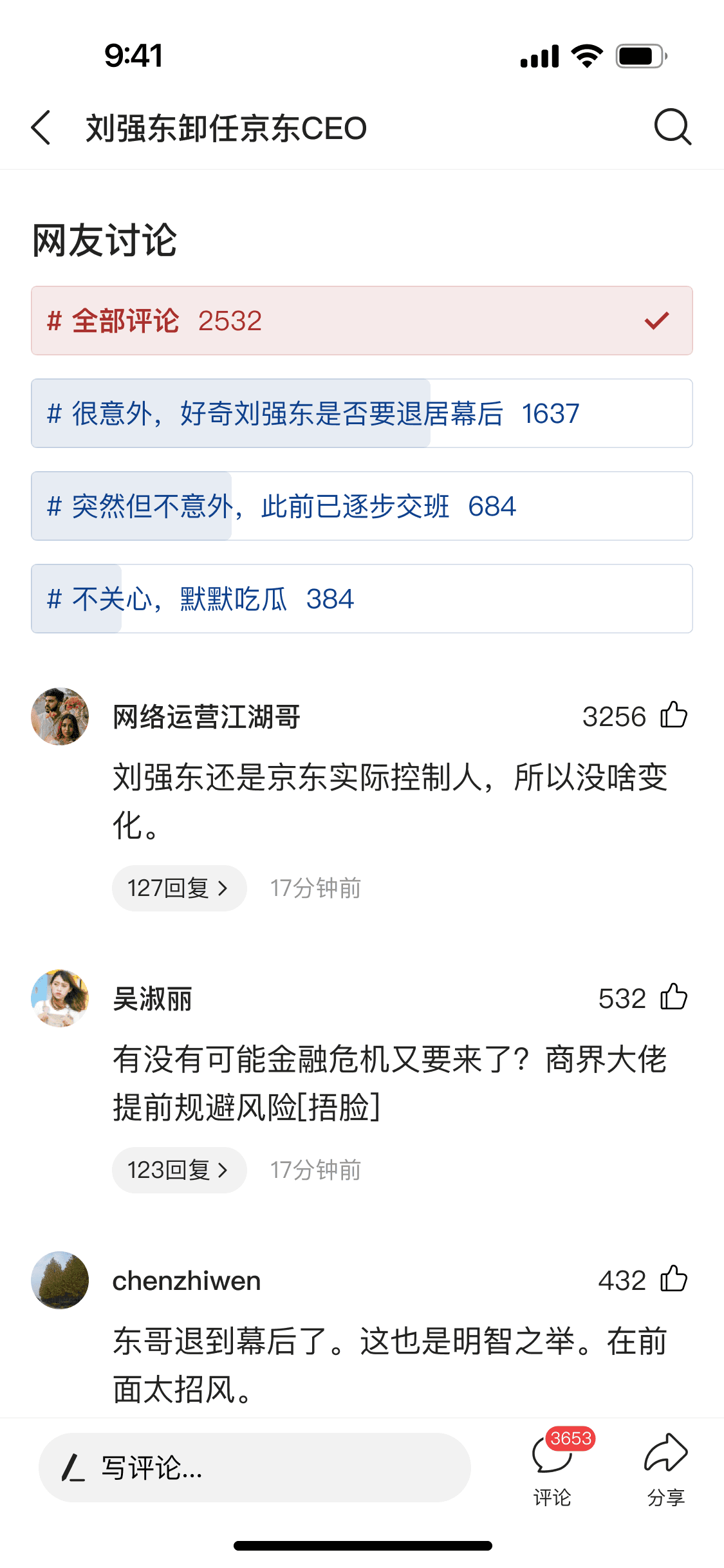
Inspired by Stage Four, where greater diversity of viewpoints further drives commenting and reading, the comment classification design from Dianping was applied to trending comment scenarios. For highly discussed events, models were used to categorize viewpoints, and summary labels were displayed at the top of the comment section. Tapping a label reveals comments under that viewpoint, allowing users to perceive the diversity of opinions at a glance.
By simulating real-time dialogue, this approach brings participants closer, reduces posting pressure, and strengthens the sense of immediacy in comment interactions.
New idea
适合长图文生态的交互方式
落地页消费形态探索
The early event detail page followed a feed-style layout
But it did not fit the trending list reading context
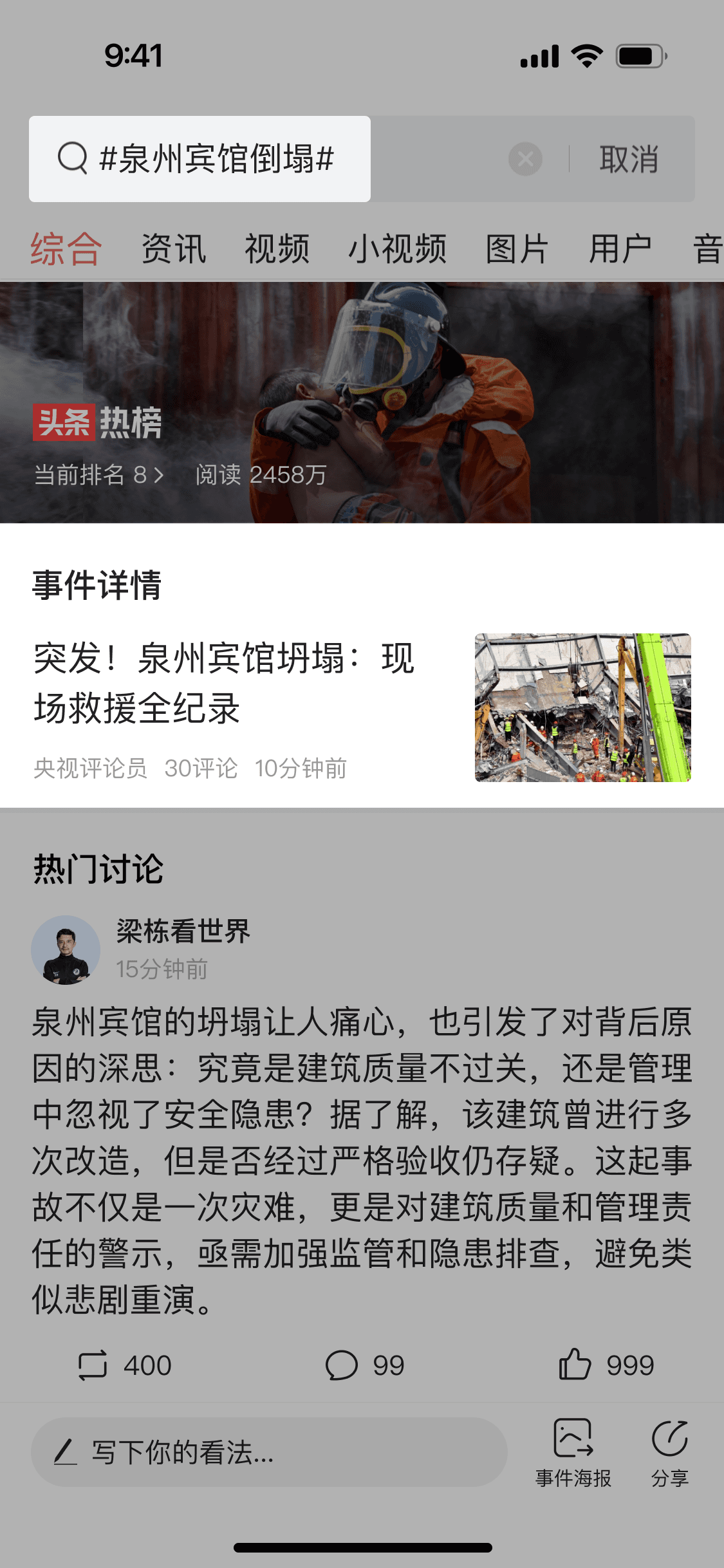
Feeds focus on filtering and selection, while the trending event page is primarily a consumption scenario. User research showed that for factual events, users prefer quick understanding rather than deep reading. Long-form articles create higher reading friction and easily drive drop-off. In addition, long-form titles often repeat event headlines, add limited new information, and introduce heavier interaction costs.
When users enter an event page from the trending list, they expect immediate content consumption. However, the first item often adds little beyond the event headline and requires an extra tap, creating unnecessary friction.
Low-cost testing
Test the current consumption value of the event page
A low-cost test evaluated routing users from the channel directly to the first article’s detail page. Results showed a slight decrease in time spent per PV on the event page, but a clear increase in trending list item clicks. Based on prior tests, trending list clicks have a stronger impact on channel retention.
Adapt different content formats for on-page consumption
Shift consumption from article detail pages to the event detail page
Top article: editor-written summary
Covering the top ten items on the list. When the first item is a news article, a manually written summary is used to ensure content safety and clarity.
Micro-posts: tap to expand the full content inline
Video and live streams: auto-play with sound muted on Wi-Fi
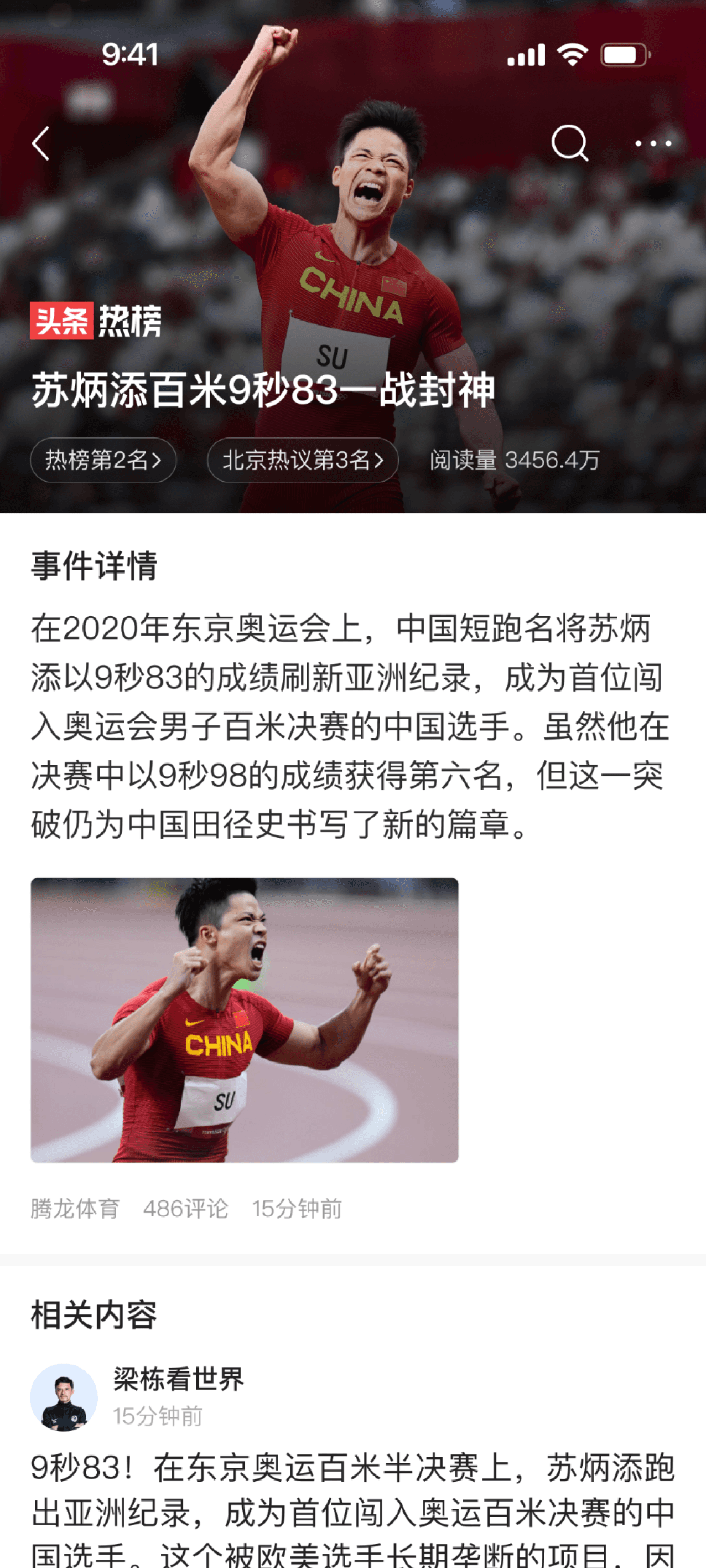
On-page consumption improved efficiency
And delivered measurable data gains
After launch, clicks on the trending list page increased, while overall time spent showed some fluctuation. Since users generally spend a relatively fixed amount of time on news consumption, higher reading efficiency enabled them to consume a wider range of content within the same time window.
后续业务调整
With the rise of AI tools
Search became a strategic priority for Toutiao
Trending list strategy was adjusted accordingly
Toutiao AI Search emerged as a key breakthrough beyond the traditional feed-based experience. To strengthen users’ perception of search value, the trending list was integrated into search flows, and event pages gradually shifted toward search-driven filtering scenarios. Some design details were adjusted accordingly. On the creation side, publishing guidance became more proactive, encouraging users to accumulate searchable content. The original comment format was shifted back to micro-posts, and topic pages were tested for broader distribution, opening up new exploration paths.


View More Projects

© Qicheng Hsu. All rights reserved.